- FDA cleared "Nobel Biocare S Series Implants" on 18 February 2026 (K252197), in six lines: each design with TiUltra™ or TiUnite® surface.1
- Every S Series implant, whatever its width, has the same NP conical connection on top.1
- The part in the bone is the same as the classic implant, so the same drills and protocols are used.1
- The S Series is separate from the classic NobelActive®, NobelParallel™ CC and NobelReplace® CC implants, which have different connection sizes for different widths.3
Why a single connection matters
On the classic lines, a wide implant has a wider connection than a narrow one (NP, RP, WP). Each needs its own abutments and parts. On the S Series, a 5.5 mm implant and a 3.5 mm implant take the same prosthetic parts.13
The FDA 510(k) summary for the S Series (cleared 18 February 2026) describes one consistent diameter at the implant–abutment interface for every implant size and type: the Narrow Platform (NP) conical connection. 1
According to the same FDA summary, the S Series implant bodies are the same as the predicate Nobel Biocare implants, so the same drills, drilling protocols and rescue tools can be used. 1
"Same body" refers to the part in the bone. The connection on top is what changed.
For you as a patient this mainly means simpler logistics for the clinic and laboratory. It is not, on its own, evidence of a better clinical result.
Nobel Biocare states that the S Series needs up to 65% fewer Multi-unit Abutment sizes than its multi-platform implant systems. 4
This is a logistics benefit for the clinic and laboratory. It is not a clinical outcome for patients.
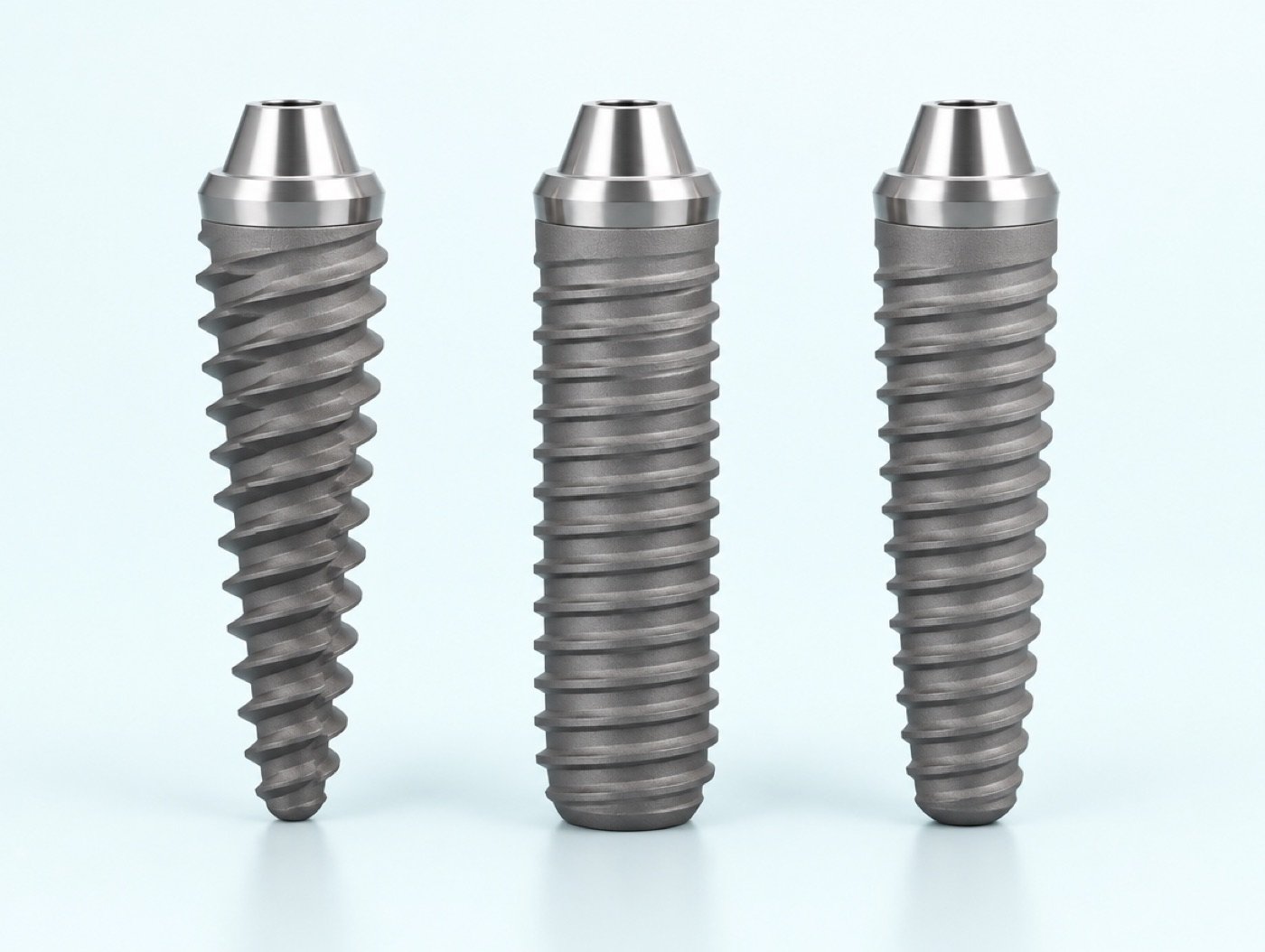
The three S Series implants
| Implant | Body shape | Diameters (mm) | Lengths (mm) |
|---|---|---|---|
| NobelActive® S implant | Expanding tapered | 3.5, 4.3, 5.0, 5.5 | 8.5–18 (5.5: 7–15)1 |
| NobelParallel™ S implant | Parallel walled | 3.75, 4.3, 5.0, 5.5 | 7–18 (5.5: 7–15)1 |
| NobelReplace® S implant | Tapered | 3.5, 4.3, 5.0 | 8–161 |
All sizes carry the NP conical connection with a 3.0 mm abutment interface.1 Nobel Biocare notes that the true length of NobelActive S and NobelParallel S is 0.5 mm shorter than the nominal length, and NobelReplace S 0.6 mm longer. Surgeons plan with this.4
Would you like a dentist to assess whether this treatment suits you?
Request an assessmentMaterial and surfaces
Nobel Biocare states that S Series implants are made of cold-worked commercially pure titanium grade 4 with a tensile strength of 983 MPa. 4
Manufacturer-reported material data; not an independent clinical study.
Each S Series design is available with either the newer TiUltra™ surface or the long-established TiUnite® surface.1
What the S Series is not
- It is not a new implant body shape: the bone-anchored part matches the classic designs.1
- It is not the Nobel Biocare N1™ system, which has a different, tri-oval connection.5
- It does not replace every classic implant: classic CC implants are still listed in Nobel Biocare's product overview.3
The design idea behind a narrower connection on a wider implant ("platform shifting") is discussed in research cited by the manufacturer; reviews of connection types find differences in bone-level changes but not clearly in survival.
Reviews of implant–abutment connections found differences between connection designs in marginal bone changes, while implant survival did not clearly differ. 67
Frequently asked questions
Is the S Series better than the classic NobelActive?
My clinic offers "NobelActive". Is that the S version?
Can an S Series implant be restored anywhere?
Last updated 28 Sep 2026 · How we review
Sources
- Regulatory recordFDA 510(k) K252197 — Nobel Biocare S Series Implants (510(k) summary) — U.S. Food and Drug Administration, 2026-02-18. Accessed 28 Sep 2026.
- Manufacturer documentationNobel Biocare — S Series (product page) — Nobel Biocare Services AG, 2026. Accessed 28 Sep 2026.
- Manufacturer documentationNobel Biocare — CC implants and prosthetics product overview 25.1 (95092) — Nobel Biocare Services AG, 2025. Accessed 28 Sep 2026.
- Manufacturer documentationNobel Biocare — S Series solution brochure (96387) — Nobel Biocare Services AG, 2026. Accessed 28 Sep 2026.
- Regulatory recordFDA 510(k) K211109 — N1 TiUltra TCC Implant System (Nobel Biocare) — U.S. Food and Drug Administration, 2021-12-21. Accessed 28 Sep 2026.
- Systematic reviewCamps-Font O et al. External, internal flat-to-flat and conical connections: systematic review and network meta-analysis — J Prosthet Dent, 2023. Accessed 28 Sep 2026.
- Systematic reviewSchoenbaum TR et al. Implant-abutment connections and marginal bone: systematic review of 45,347 implants — Int J Oral Maxillofac Implants, 2023. Accessed 28 Sep 2026.
Educational information only. The choice of implant system depends on your anatomy, restorative plan, bone quality and the clinician's assessment. This website does not recommend a specific implant for you.