Who is it for?
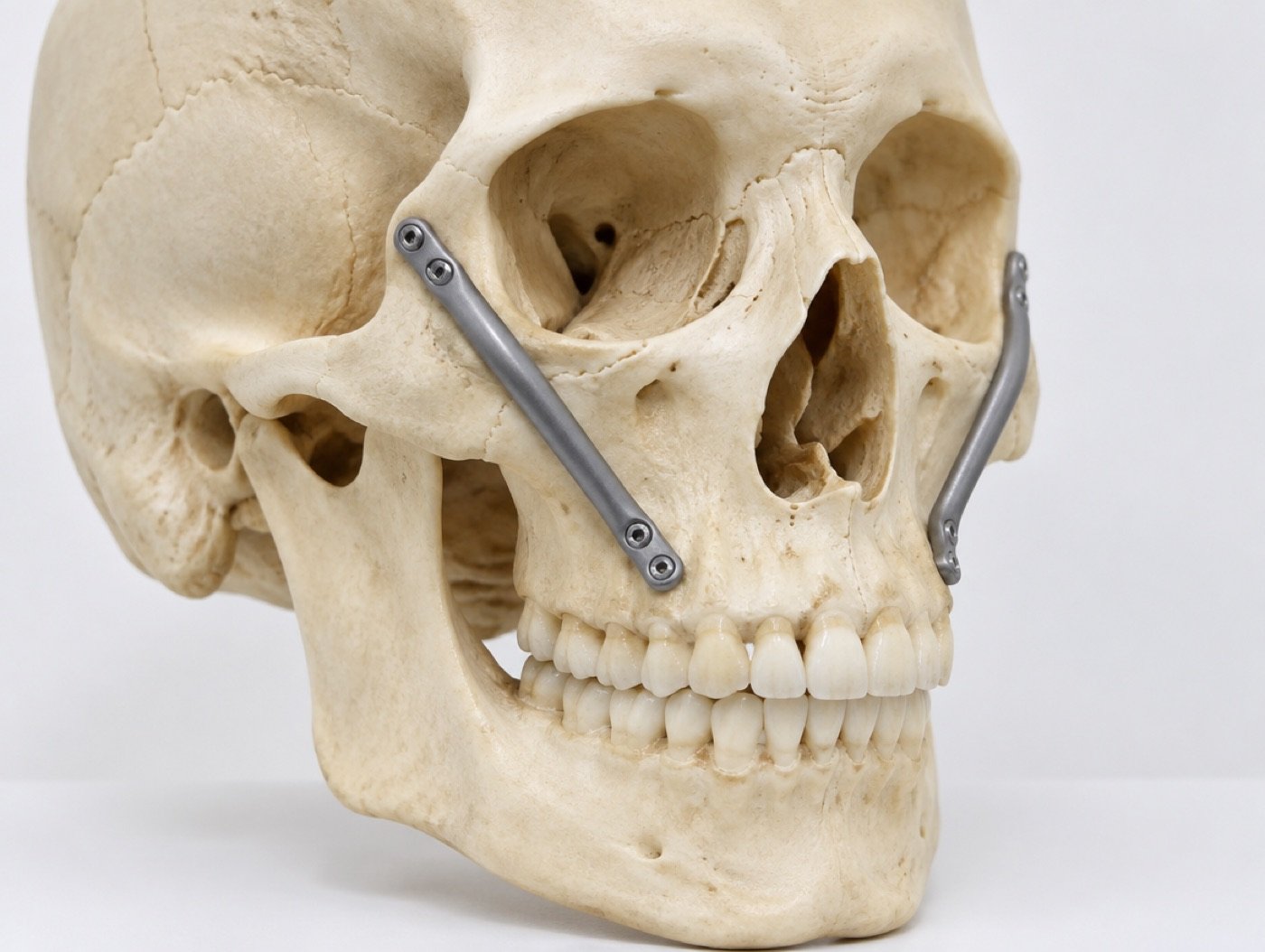
Zygomatic implants are an option for people with severe bone loss in the upper jaw, often after many years of wearing a denture. They are a specialist surgery, usually under sedation or general anaesthesia.
The ITI consensus report on zygomatic implants found mean long-term zygomatic implant survival of 96.2% over a mean follow-up of 6.3 years, with sinusitis occurring in 14.2% of cases. 2
These pooled figures cover zygomatic implants in general, not one manufacturer's system.
Risks to discuss
- Sinus problems (sinusitis) are the most commonly reported complication.2
- Surgery is longer and more complex than standard implant surgery; choose an experienced team.
- Cleaning under the bridge must be very thorough.
Would you like a dentist to assess whether this treatment suits you?
Request an assessmentFDA history
| 510(k) | Decision | Device name (as filed) |
|---|---|---|
| K243834 | 25 Aug 2025 | NobelZygoma TiUltra Implant system |
| K183069 | 4 Dec 2018 | NobelZygoma 0° |
| K161598 | 14 Mar 2017 | NobelZygoma 0° |
| K152093 | 16 Mar 2016 | NobelZygoma 45° |
| K070182 | 4 Apr 2007 | ZYGOMA IMPLANT (IMMEDIATE FUNCTION) |
| K970499 | 16 Oct 1997 | BRANEMARK SYSTEM ZYGOMATICUS FIXTURE SYSTEM |
6 record(s) from the openFDA 510(k) database, retrieved 28 Sep 2026. A 510(k) clearance means FDA found a device substantially equivalent to one already on the market; it is not a quality ranking.
Last updated 28 Sep 2026 · How we review
Sources
- Regulatory recordFDA 510(k) K243834 — NobelZygoma TiUltra Implant system — U.S. Food and Drug Administration, 2025-08-25. Accessed 28 Sep 2026.
- Consensus / guidelineAl-Nawas B et al. ITI consensus report on zygomatic implants — Int J Implant Dent, 2023. Accessed 28 Sep 2026.
- Regulatory recordFDA 510(k) K970499 — Brånemark System Zygomaticus Fixture System — U.S. Food and Drug Administration, 1997-10-16. Accessed 28 Sep 2026.
Educational information only. The choice of implant system depends on your anatomy, restorative plan, bone quality and the clinician's assessment. This website does not recommend a specific implant for you.