In short
- CBCT shows bone height, width and nerves in 3D.
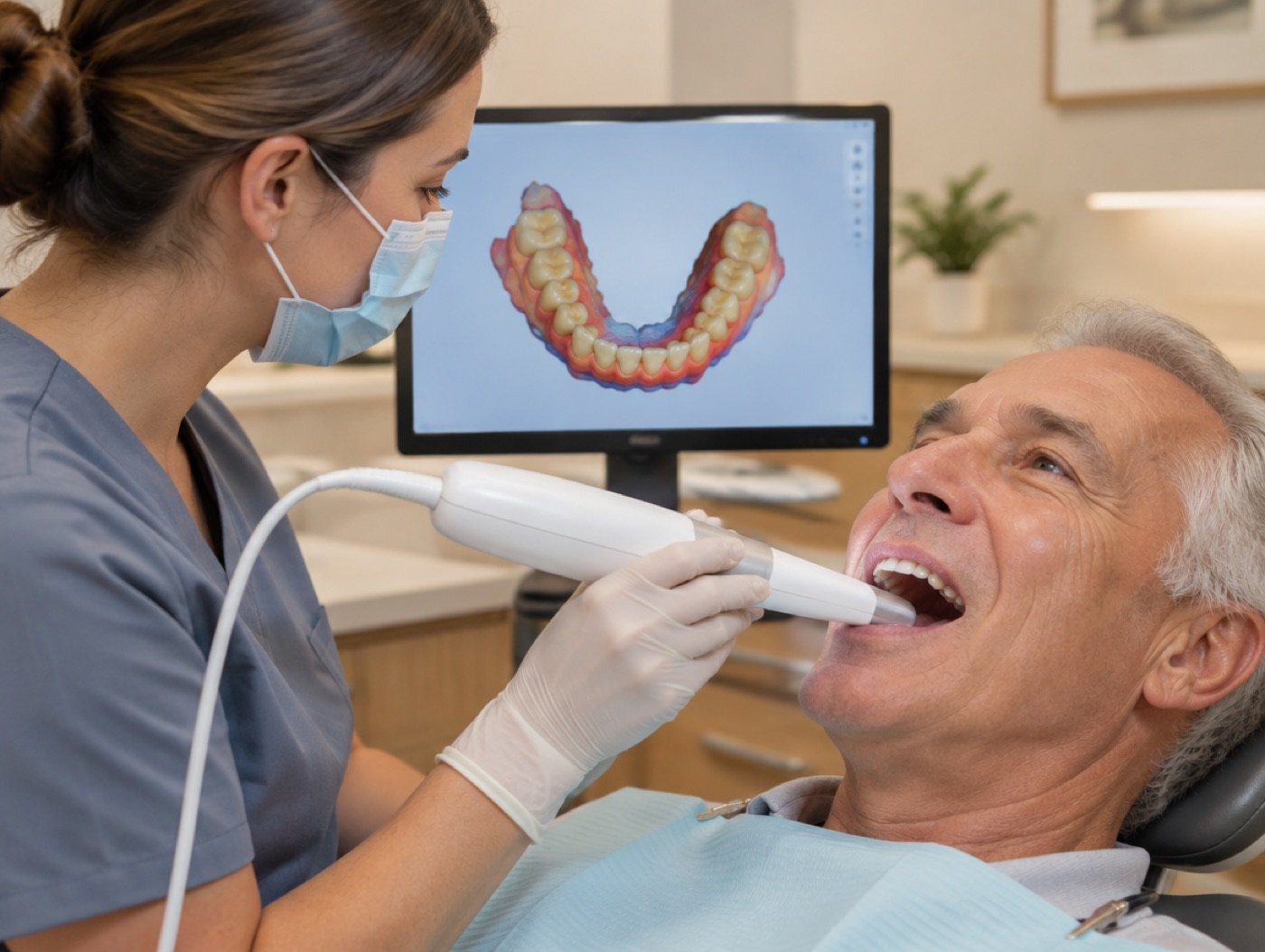
- An intraoral scan replaces most traditional impressions.
- Planning software (for example DTX Studio™ software) links the two; a surgical guide can transfer the plan to surgery.
The steps
- 3D x-ray (CBCT) of the jaw.
- Digital scan of teeth and gums.
- Virtual planning of teeth and implant positions.
- Optional printed surgical guide (NobelGuide® concept).
- Surgery, then digitally designed crowns or bridge (NobelProcera®).
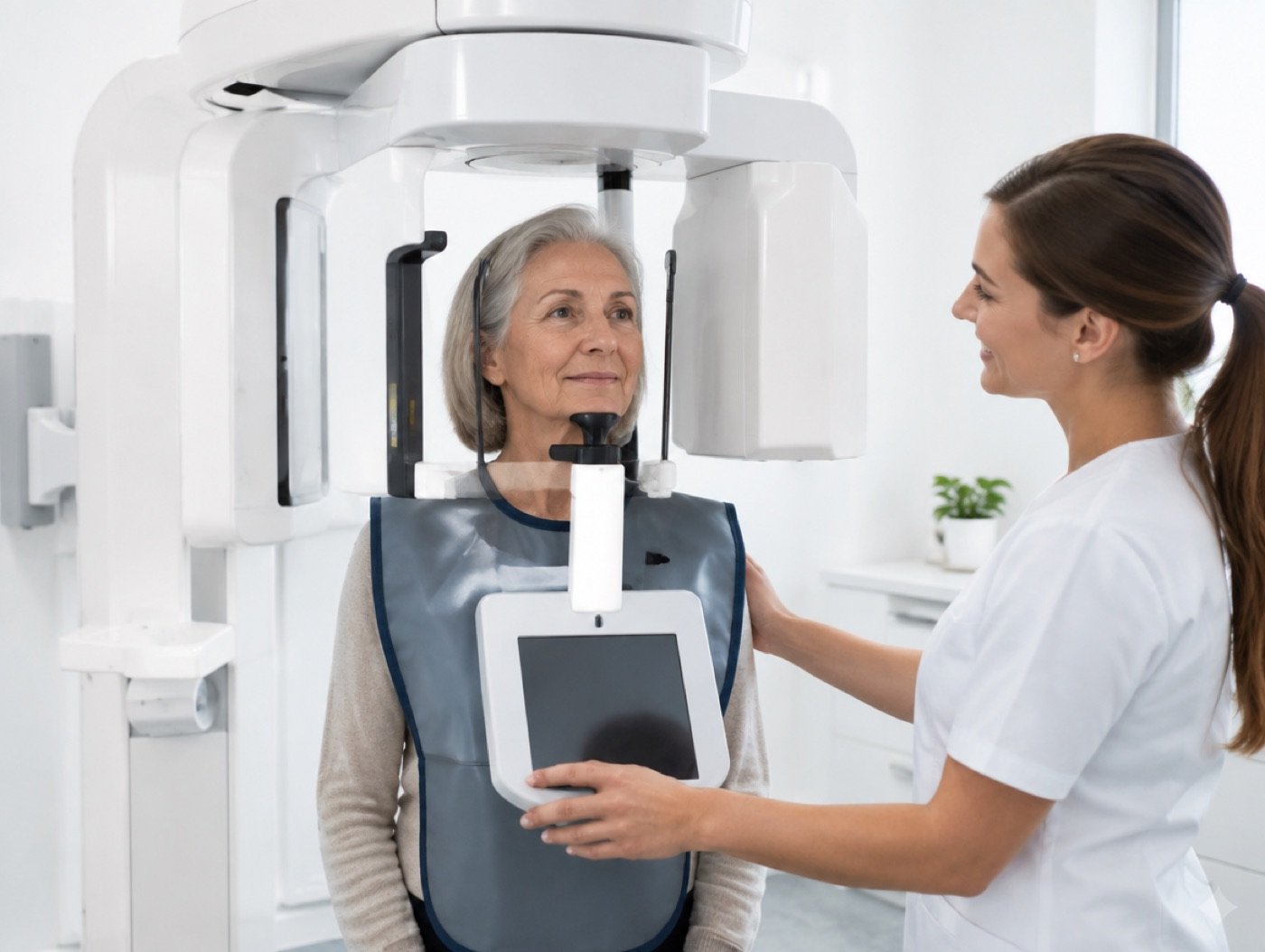
Ask to see your 3D plan. A good clinic will explain it to you on screen.
Clinical review pending. Facts on this page are checked against the sources listed below (regulatory records, manufacturer documents, peer-reviewed research). A named clinician will review it before we call it medically reviewed.
Last updated 28 Sep 2026 · How we review
Last updated 28 Sep 2026 · How we review
Educational information only. The choice of implant system depends on your anatomy, restorative plan, bone quality and the clinician's assessment. This website does not recommend a specific implant for you.